
story
photo curtecy of

Love Letters Tattoo Studio
Love Letters Tattoo Studio
Interview with Melissa and Arianna, tattoo artists from the Love Letters studio, A creative space in the heart of Navigli, it brings together tattoos, piercings, and a strong sense of community.
Love Letters Tattoo Studio, located in Navigli along the canal, opened in 2024. In its offer you can find not only tattoos, but also piercings, toothgems and more. They pay a lot of attention to cultivate the relationship between their artists and clients, organizing walk-in events, allowing for an informal atmosphere and true spontaneity.
Interview with tattoo artists Melissa and Arianna:
Love Letters Tattoo Studio, located in Navigli along the canal, opened in 2024. In its offer you can find not only tattoos, but also piercings, toothgems and more. They pay a lot of attention to cultivate the relationship between their artists and clients, organizing walk-in events, allowing for an informal atmosphere and true spontaneity.
Interview with tattoo artists Melissa and Arianna:
What makes Love Letters different from other studios in Milan?
What makes Love Letters different from other studios in Milan?
Melissa: Love Letters is different from many other studios in Milan because it wasn’t created just as a tattoo studio, but as a creative and human space. There’s a strong focus on each tattoo artist’s individual identity, on the dialogue with people, and on the atmosphere that develops inside the studio. We’re not interested in following a specific trend or having one easily recognizable style, we prefer building an environment where different artists can coexist and experiment while still sharing a common sensibility. Our relationship with the neighborhood and the community around us is also a big part of our identity.
Melissa: Love Letters is different from many other studios in Milan because it wasn’t created just as a tattoo studio, but as a creative and human space. There’s a strong focus on each tattoo artist’s individual identity, on the dialogue with people, and on the atmosphere that develops inside the studio. We’re not interested in following a specific trend or having one easily recognizable style, we prefer building an environment where different artists can coexist and experiment while still sharing a common sensibility. Our relationship with the neighborhood and the community around us is also a big part of our identity.
How does being between a tourist hub like Naviglio Grande and an art school like NABA shape the kind of clients you get and the work you produce?
How does being between a tourist hub like Naviglio Grande and an art school like NABA shape the kind of clients you get and the work you produce?
Melissa: Our location has a huge influence on the kind of energy that comes into the studio. On one side, there are tourists and people just passing through who want to take home a memory of Milan, on the other, there are students, artists, and people who are very sensitive to aesthetics and experimentation. This mix makes the work incredibly dynamic. On the same day, we might do a small, impulsive tattoo and then move on to a much more conceptual project.
Melissa: Our location has a huge influence on the kind of energy that comes into the studio. On one side, there are tourists and people just passing through who want to take home a memory of Milan, on the other, there are students, artists, and people who are very sensitive to aesthetics and experimentation. This mix makes the work incredibly dynamic. On the same day, we might do a small, impulsive tattoo and then move on to a much more conceptual project.
How do you curate or choose your artists?
How do you curate or choose your artists?
Melissa: Rather than looking for a specific style, we look for people with a strong and authentic vision, as well as solid technical skills. Artistic sensitivity matters a lot, but so does the way someone shares a collective space and connects with clients. We want to create a group of artists with different but compatible personalities, where there’s mutual respect and a shared desire to grow together.
Melissa: Rather than looking for a specific style, we look for people with a strong and authentic vision, as well as solid technical skills. Artistic sensitivity matters a lot, but so does the way someone shares a collective space and connects with clients. We want to create a group of artists with different but compatible personalities, where there’s mutual respect and a shared desire to grow together.
What’s the idea behind walk-in events? Accessibility, spontaneity, community?
What’s the idea behind walk-in events? Accessibility, spontaneity, community?
Melissa: It’s a combination of all those things. Walk-in events come from the desire to make tattooing feel more spontaneous and accessible, including financially. We like the idea that someone can walk in without too many expectations, see a design, talk to an artist, and leave with a tattoo that was born in that exact moment. It’s also a way to create movement, connection, and a sense of community around the studio.
Melissa: It’s a combination of all those things. Walk-in events come from the desire to make tattooing feel more spontaneous and accessible, including financially. We like the idea that someone can walk in without too many expectations, see a design, talk to an artist, and leave with a tattoo that was born in that exact moment. It’s also a way to create movement, connection, and a sense of community around the studio.

What’s the atmosphere like during those days, and who usually shows up?
What’s the atmosphere like during those days, and who usually shows up?
Melissa: The atmosphere during those days is very lively and informal. Some people stop by just out of curiosity, others are friends of the artists, regular clients, or people who walk in impulsively while wandering around the Navigli area. It creates a very natural environment, almost more like a cultural event than a traditional studio appointment. Often, people who come to walk-ins are also looking for the social side of the experience
Melissa: The atmosphere during those days is very lively and informal. Some people stop by just out of curiosity, others are friends of the artists, regular clients, or people who walk in impulsively while wandering around the Navigli area. It creates a very natural environment, almost more like a cultural event than a traditional studio appointment. Often, people who come to walk-ins are also looking for the social side of the experience
How do the artists prepare for that format?
How do the artists prepare for that format?
Melissa: During the month leading up to the event, the artists start developing new ideas that can either relate to the theme of the event or go completely outside of it. It really depends on the inspiration of the moment. Personally, I love drawing, so you’ll always find lots of new flash designs that can suit different tastes and needs.
Melissa: During the month leading up to the event, the artists start developing new ideas that can either relate to the theme of the event or go completely outside of it. It really depends on the inspiration of the moment. Personally, I love drawing, so you’ll always find lots of new flash designs that can suit different tastes and needs.
What’s your artistic background?
What’s your artistic background?
Melissa: graduated in Architecture from the Politecnico di Milano. I worked as an architect for many years in the fashion industry, and then, thanks to a friend of mine who was a tattoo artist, I started developing my skills, first as an illustrator and later as a tattoo artist. It was very difficult at the beginning because tattooing itself is extremely challenging and involves many different factors. To me, tattooing is a balance between art and craftsmanship, and that’s exactly what has always fascinated me about this profession.
Melissa: graduated in Architecture from the Politecnico di Milano. I worked as an architect for many years in the fashion industry, and then, thanks to a friend of mine who was a tattoo artist, I started developing my skills, first as an illustrator and later as a tattoo artist. It was very difficult at the beginning because tattooing itself is extremely challenging and involves many different factors. To me, tattooing is a balance between art and craftsmanship, and that’s exactly what has always fascinated me about this profession.
Arianna: I went to liceo artistico and then to university at Brera Academy (laurea triennale) and I graduated in Incision techniques and fine art printmaking in 2023, as for tattooing I started my apprenticeship with Micol, one of the studios owners, soon after.
Arianna: I went to liceo artistico and then to university at Brera Academy (laurea triennale) and I graduated in Incision techniques and fine art printmaking in 2023, as for tattooing I started my apprenticeship with Micol, one of the studios owners, soon after.
How would you describe your style, and what influences have shaped it?
How would you describe your style, and what influences have shaped it?
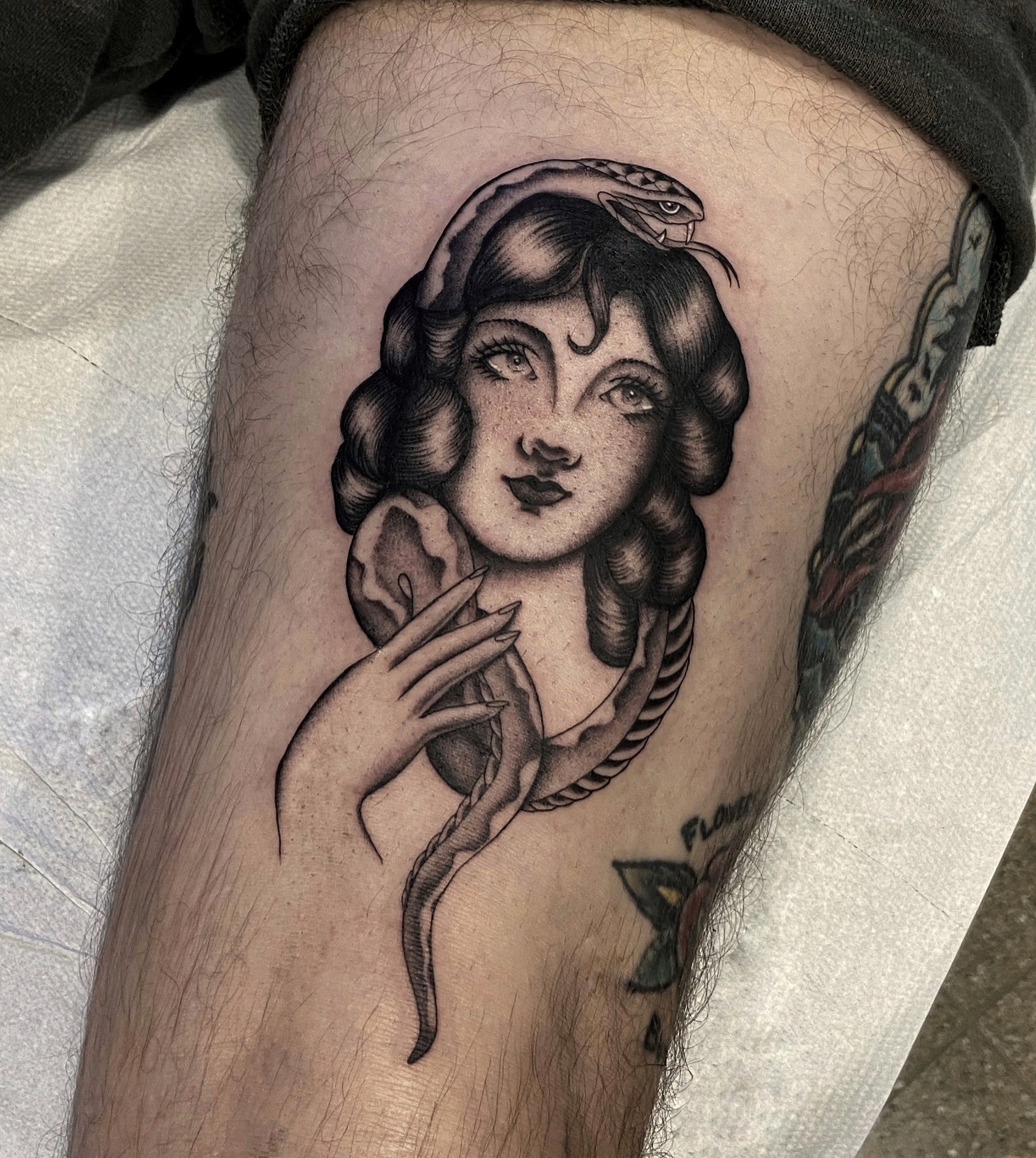
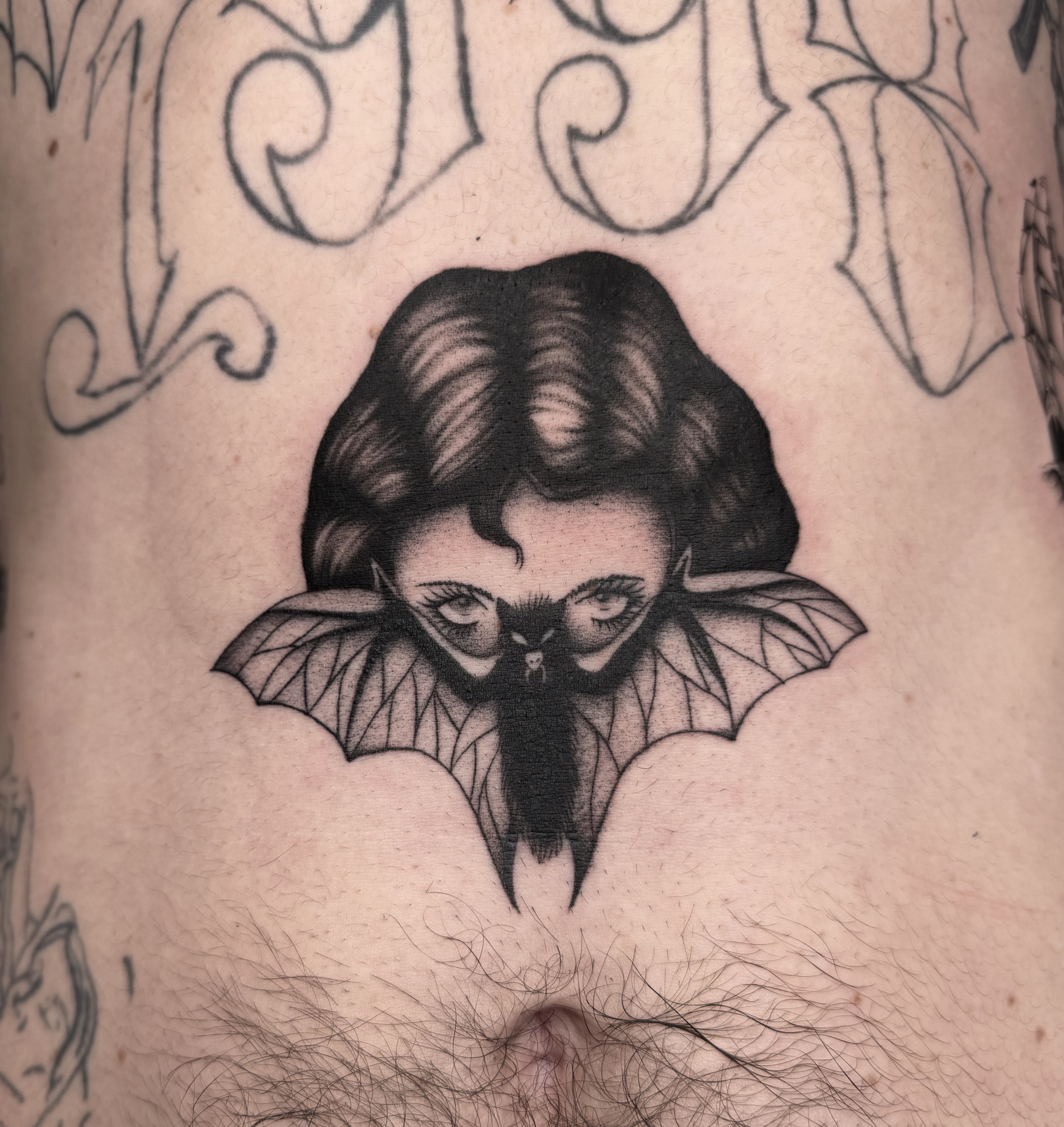
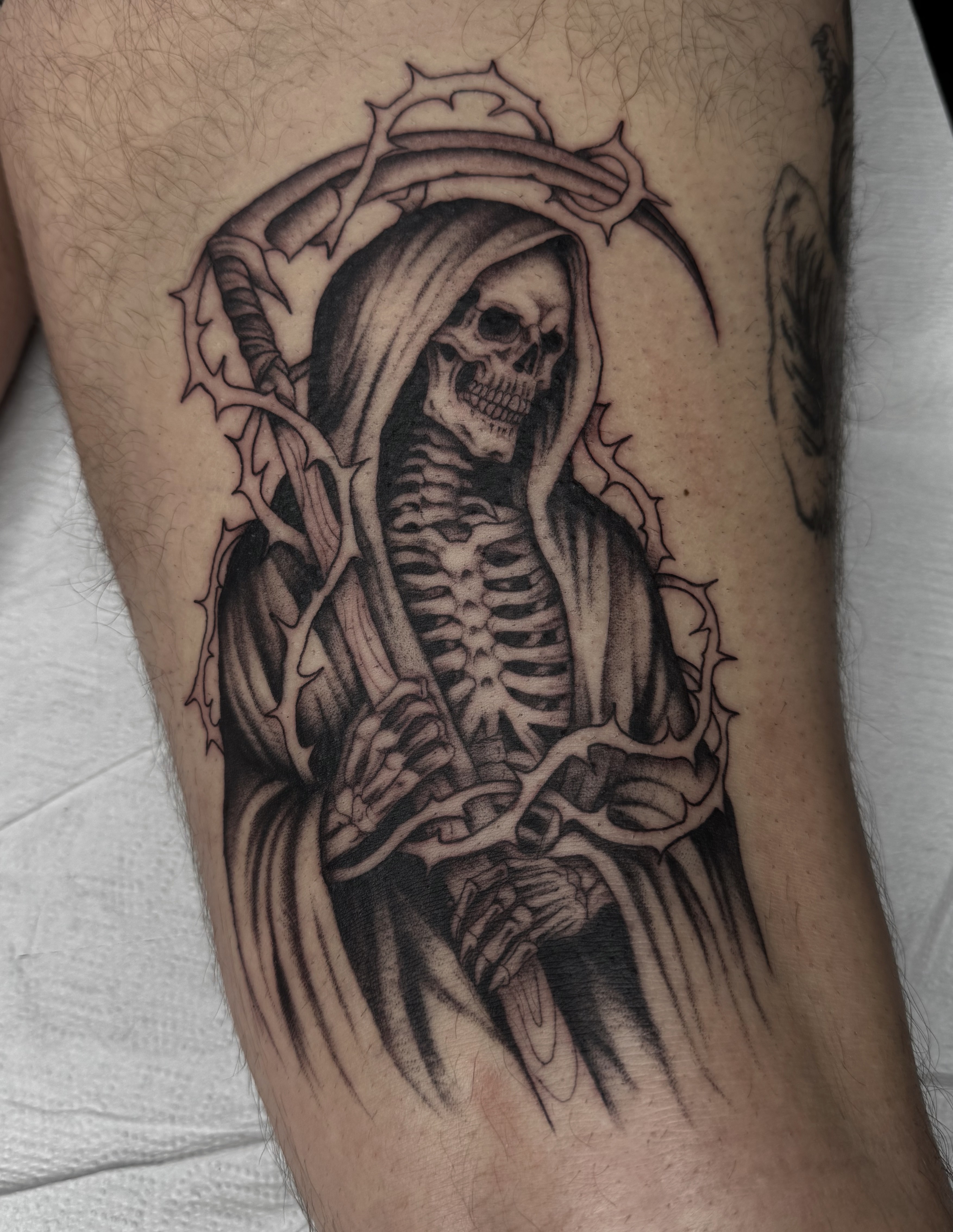
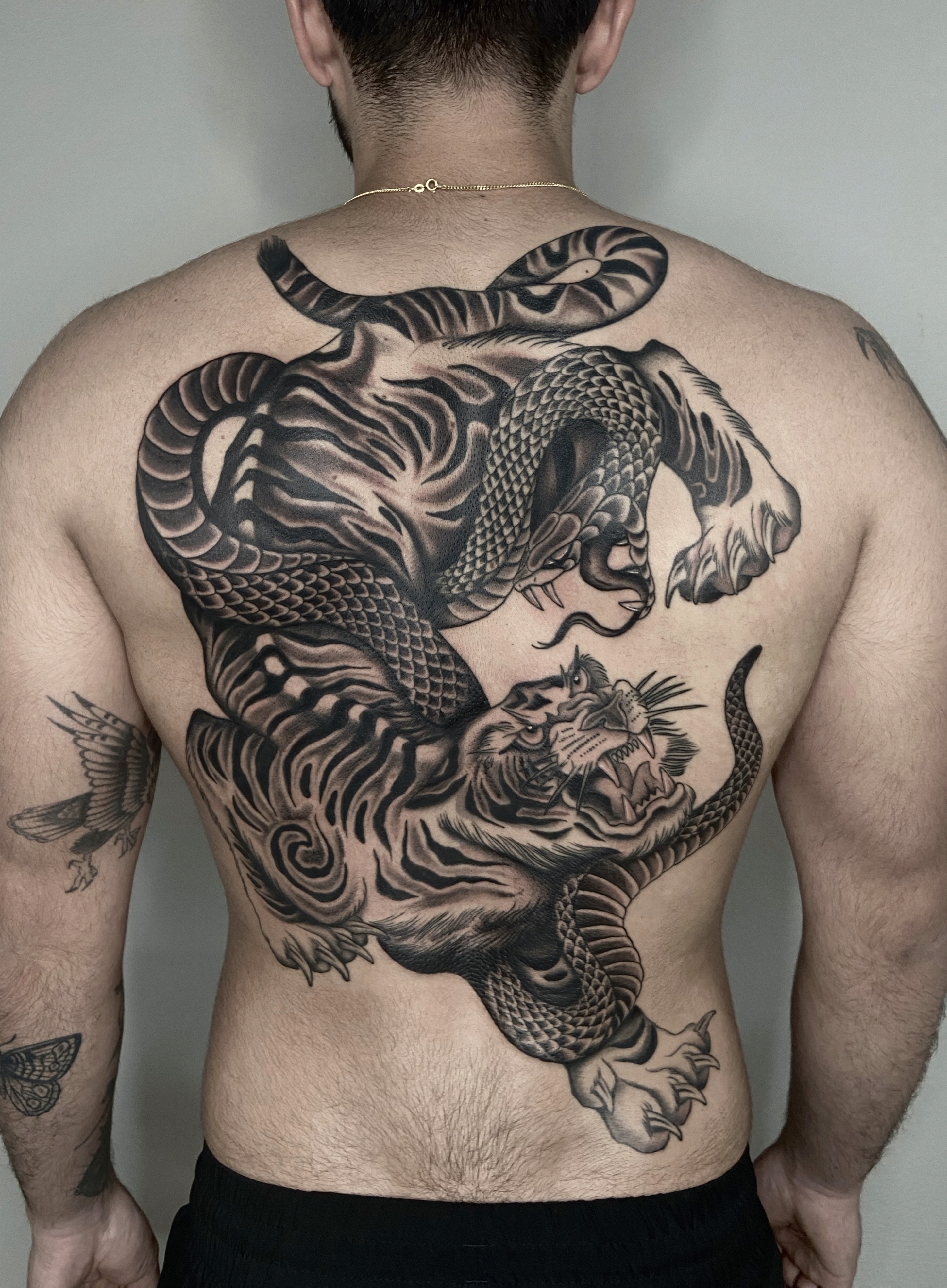
Melissa: My style is traditional tattooing, in black and grey. I grew artistically in a studio, one of the best in the world, where all the tattoo artists are specialized in traditional tattooing, and that’s definitely where many of my influences come from. Before my apprenticeship I used to draw more blackwork, gothic, and dark imagery, which I later completely abandoned in favor of a direction that felt more aligned with my personal taste.
Melissa: My style is traditional tattooing, in black and grey. I grew artistically in a studio, one of the best in the world, where all the tattoo artists are specialized in traditional tattooing, and that’s definitely where many of my influences come from. Before my apprenticeship I used to draw more blackwork, gothic, and dark imagery, which I later completely abandoned in favor of a direction that felt more aligned with my personal taste.
Arianna: I would maybe say illustrative and minimal. I was always really inspired by Schiele, Die Brücke and German expressionism.
Arianna: I would maybe say illustrative and minimal. I was always really inspired by Schiele, Die Brücke and German expressionism.


How do you feel about Milan’s tattoo scene right now?
How do you feel about Milan’s tattoo scene right now?
Melissa: In my opinion, the tattoo scene right now is extremely chaotic, but there are still many outstanding names and incredibly talented tattoo artists. There are styles that will always remain, the ones that have existed forever, and others that simply follow current trends and will eventually fade away completely over time. What will remain, for sure, are the marks left on people’s skin.
Melissa: In my opinion, the tattoo scene right now is extremely chaotic, but there are still many outstanding names and incredibly talented tattoo artists. There are styles that will always remain, the ones that have existed forever, and others that simply follow current trends and will eventually fade away completely over time. What will remain, for sure, are the marks left on people’s skin.
Arianna: I think it's pretty full at the moment so it's pretty difficult to carve a place for yourself, especially if you are a newbie, but at the same time it's really fun and stimulating at an artistic level to have so many artists and styles to get inspiration from, and also exchange techniques and tips.
Arianna: I think it's pretty full at the moment so it's pretty difficult to carve a place for yourself, especially if you are a newbie, but at the same time it's really fun and stimulating at an artistic level to have so many artists and styles to get inspiration from, and also exchange techniques and tips.