design and creative direction
photography, editing and light
model
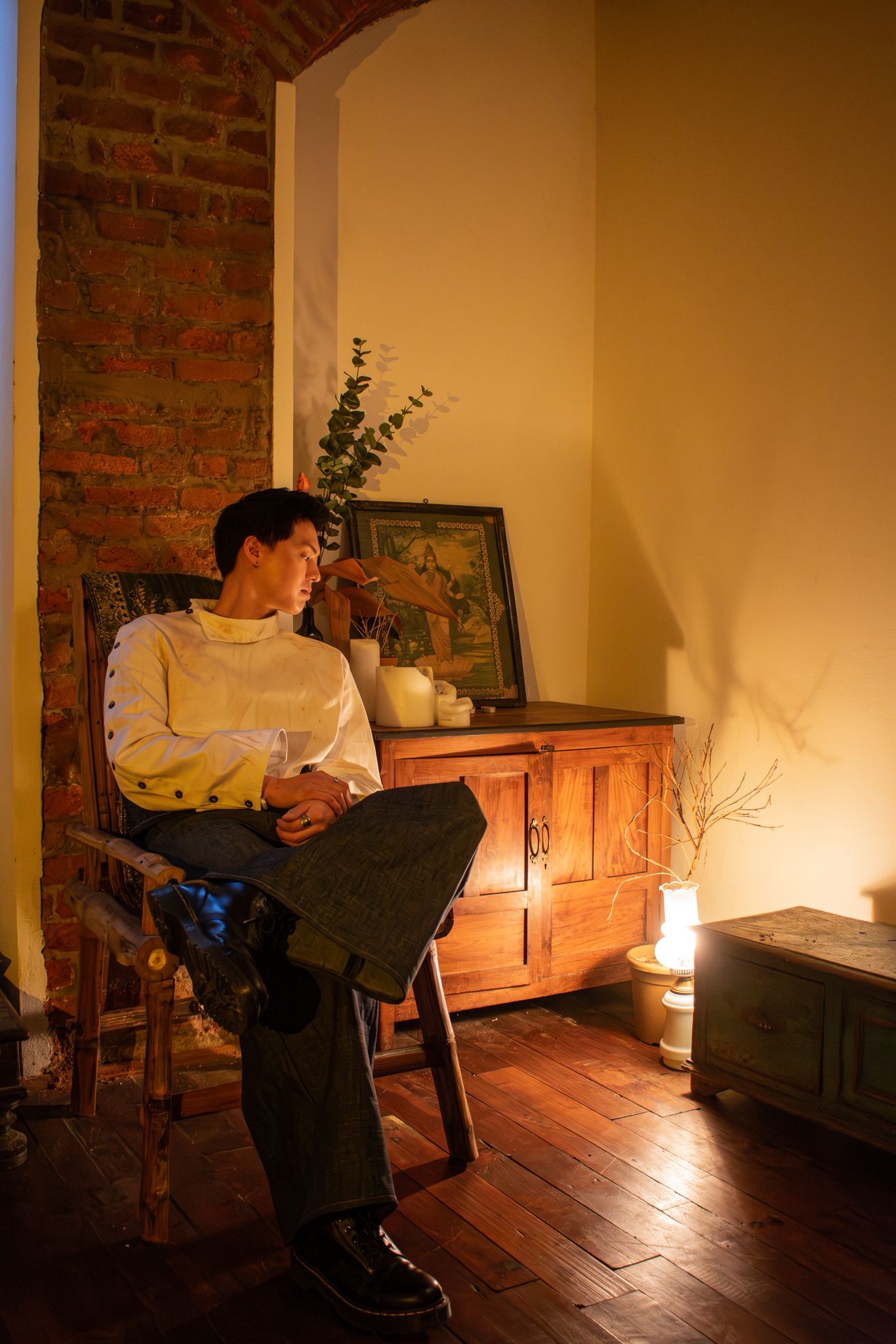
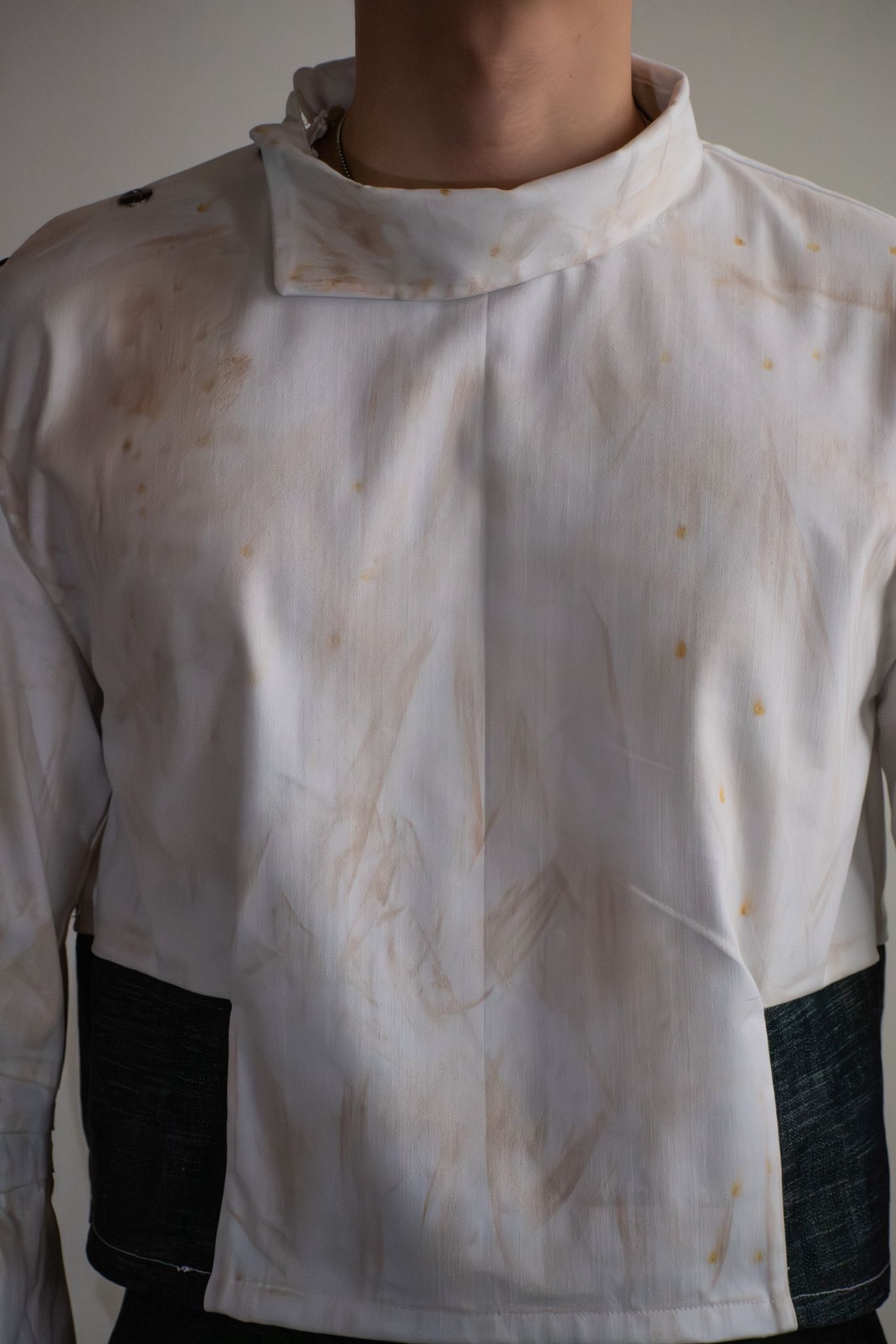
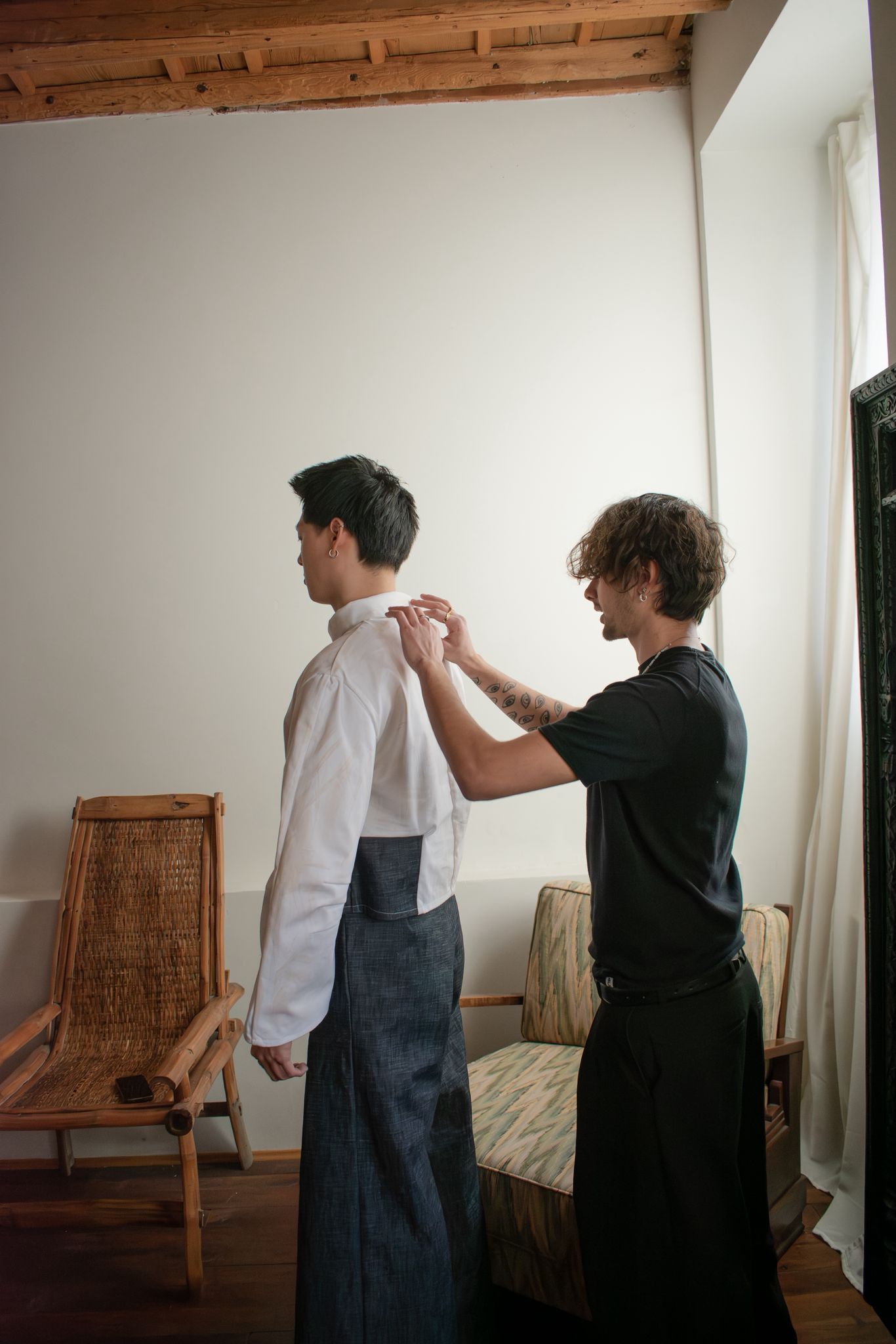
Rusted and burnt shirt with jeans creating an outfit inspired by Japanese firefighters from the Edo period.
Leonardo:
The concept of the collection, titled “Hikeshi in Rust”, from which this outfit is derived, draws inspiration from Japanese culture. More specifically, I was inspired by the figure of firefighters during the Edo period in Japan. I explored their attire and garments, the way they have been depicted over time in various illustrations, and above all, the stories that have emerged around them.
The concept of the collection, titled “Hikeshi in Rust”, from which this outfit is derived, draws inspiration from Japanese culture. More specifically, I was inspired by the figure of firefighters during the Edo period in Japan. I explored their attire and garments, the way they have been depicted over time in various illustrations, and above all, the stories that have emerged around them.
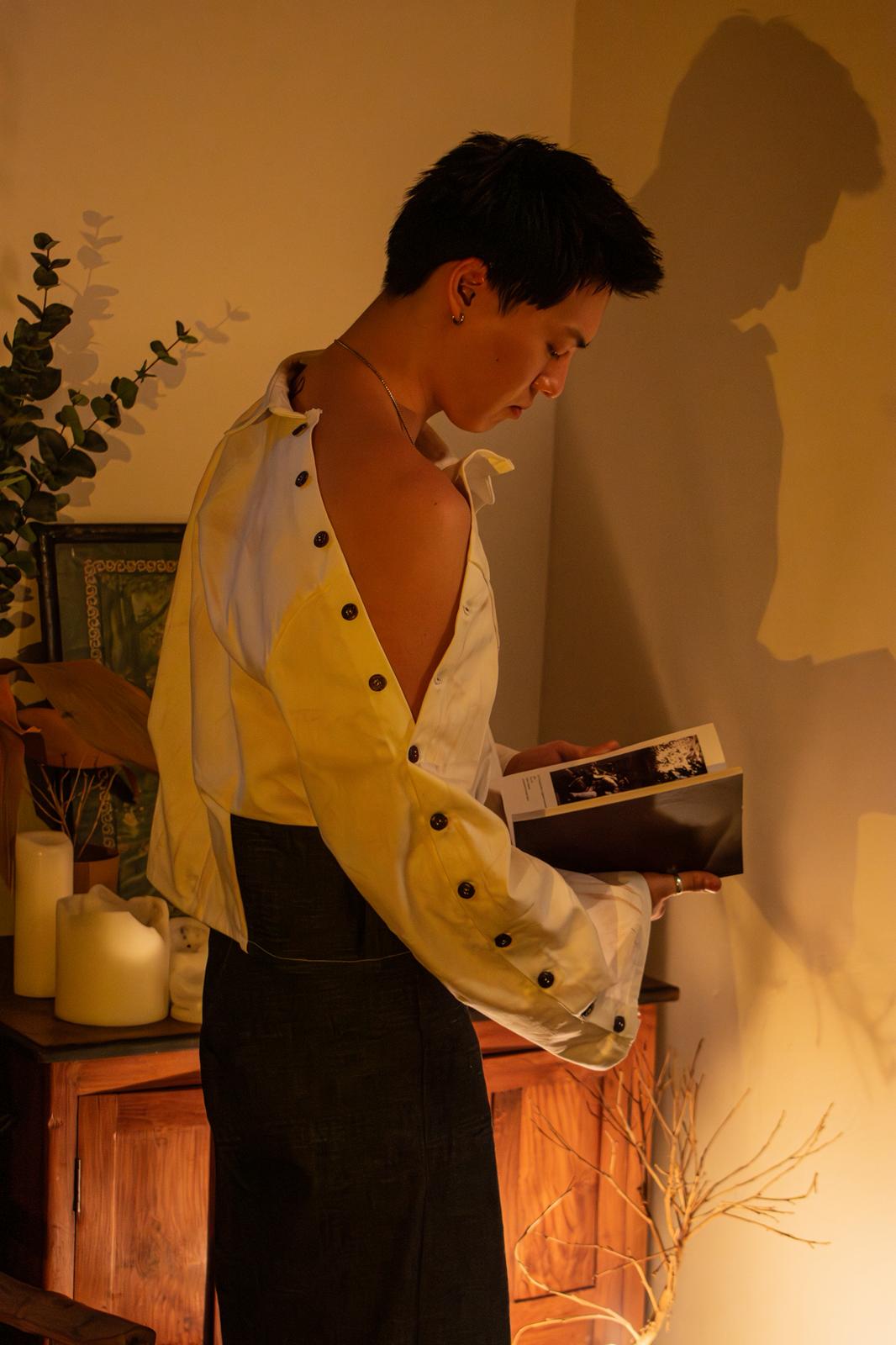

One particular account states that firefighters of that era did not extinguish fires in the conventional sense; rather, they contained them by removing whatever could fuel their spread, or by using alternative methods. This narrative directly inspired the main detail of the look. The surface manipulation, created through a blend of rust-like textures and burn effects, is intended to evoke the remnants that might have marked the bodies of those who fought fires in a time when protective equipment, as we know it today, did not exist. The side button openings are also intentional; they could have provided greater protection by reducing frontal openings. Furthermore, the silhouettes pay tribute to traditional Japanese forms, characterized by generous yet controlled volumes, structured, deliberate, and never excessive.
One particular account states that firefighters of that era did not extinguish fires in the conventional sense; rather, they contained them by removing whatever could fuel their spread, or by using alternative methods. This narrative directly inspired the main detail of the look. The surface manipulation, created through a blend of rust-like textures and burn effects, is intended to evoke the remnants that might have marked the bodies of those who fought fires in a time when protective equipment, as we know it today, did not exist. The side button openings are also intentional; they could have provided greater protection by reducing frontal openings. Furthermore, the silhouettes pay tribute to traditional Japanese forms, characterized by generous yet controlled volumes, structured, deliberate, and never excessive.
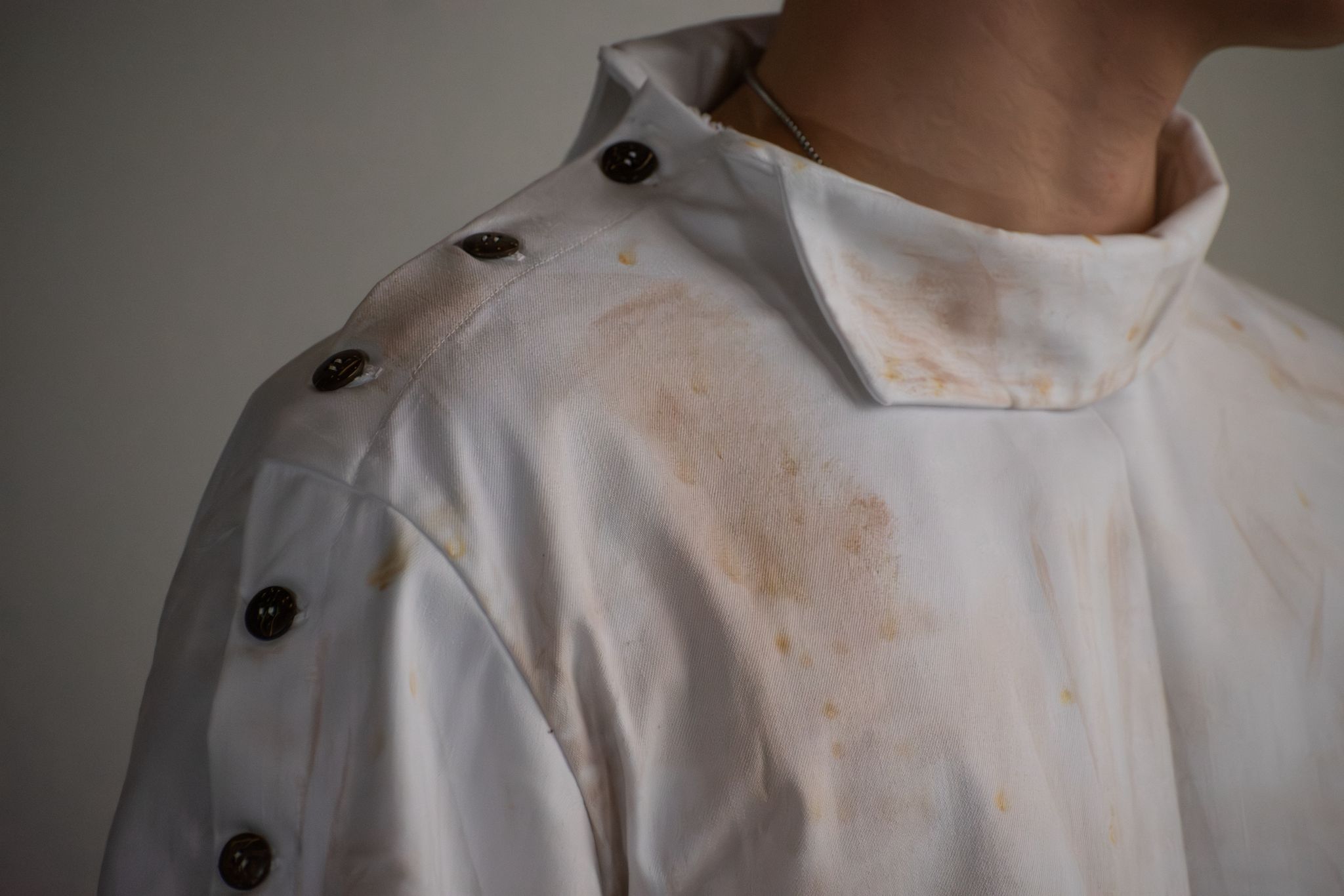
The choice of fabrics reinforces the concept: entirely plant-based materials, and notably heavy. For the shirt, I selected a gabardine that becomes slightly lighter through processing, echoing the transformative effects of fire. For the jeans, I chose a 100% cotton denim as a tribute to one of the most iconic elements of Japanese style.
The choice of fabrics reinforces the concept: entirely plant-based materials, and notably heavy. For the shirt, I selected a gabardine that becomes slightly lighter through processing, echoing the transformative effects of fire. For the jeans, I chose a 100% cotton denim as a tribute to one of the most iconic elements of Japanese style.